

A sample of the many talented students who are fostered by public education teachers across the state opened day two of Annual Conference.
Campbelltown Performing Arts High School student Monique Galla-Laine and members of the NSW Public Schools Aboriginal Dance Company entertained delegates, before debates relevant to teachers’ work began.



Education, training and skills for workers is critical to our future as a nation, and TAFE is the beating heart of that effort, Federal Skills and Training Minister Brendan O’Connor told Annual Conference delegates, via video.
“Without strong TAFEs, we will not achieve our vision of a future made in Australia or achieve net zero [carbon emissions targets] or ensure an enduring care sector. Without TAFE-qualified workers, we won’t build the 1.2 million homes that people need to live in,” Mr O’Connor said.
National Skills Agreement: shared stewardship
In January, the federal, state and territory governments commenced a $30 billion, five-year National Skills Agreement to strengthen the vocational education sector. “It’s the first agreement to embed shared stewardship to provide national leadership of skills for shared national priorities,” Mr O’Connor said. “Ministers have set priorities including supporting the transformation to net zero, sustaining our essential care services and delivering housing supply, while at the same time progressing gender equality, and closing the gap for First Nations people.”
Unions consulted on workforce blueprint
Mr O’Connor said the Vocational Education and Training Workforce Blueprint was being developed in collaboration with states, territories and unions to support, grow and sustain the VET workforce.
Annual Conference has endorsed continuing Federation campaigning and engagement with the NSW Government and TAFE NSW to facilitate the negotiation and implementation of a statewide staffing agreement, a further enterprise agreement of three years duration and delivery of the VET review panel recommendations.
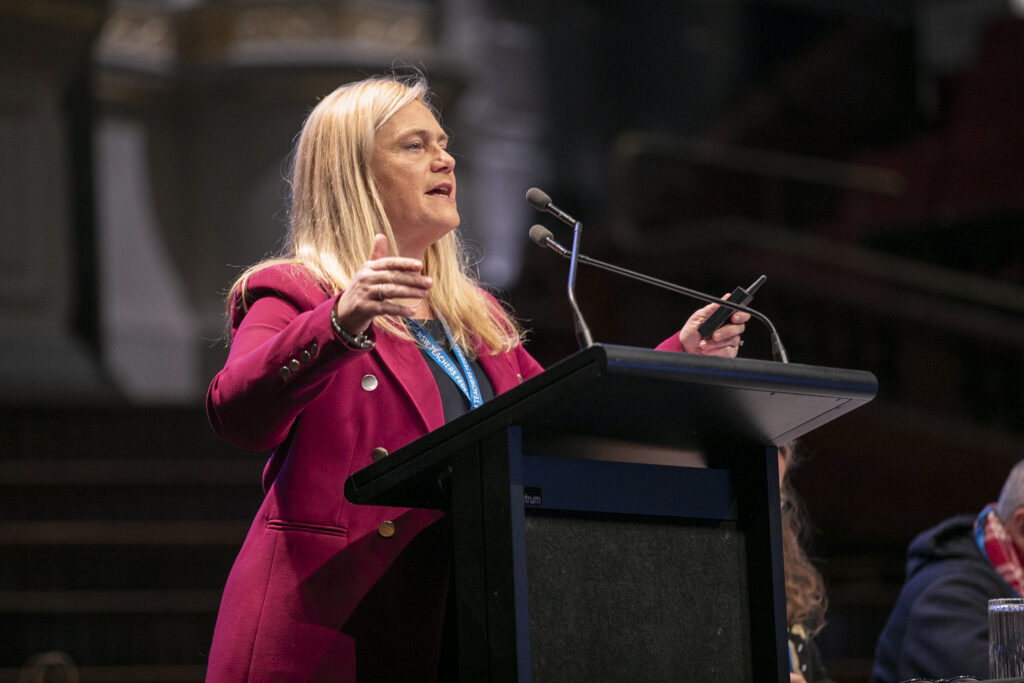
“These conditions will provide the necessary certainty and stability required to facilitate the enabling conditions for TAFE to thrive and public education for TAFE students and communities,” delegates heard from Federation Deputy President Amber Flohm.
The cost of underfunding
Delegates heard governments’ failure to properly invest in TAFE has led to chronic shortages of skilled workers in industries vital to several high priority economic, social justice and environmental strategies.
Ms Flohm said housing affordability, climate change, re-establishing the local manufacturing industry, early childhood education and care, disability, aged care and eradication of family and domestic violence care were being hampered by chronic skills shortages.
Ageing TAFE infrastructure, buildings falling into disrepair and unkept college grounds were also raised.
Federation eagerly awaits the final report of the Vocational Education and Training (VET) Review panel, due to be released imminently, about transforming, integrating and underpinning the VET system. Issues to be addressed include funding, the teaching workforce, equity and access, apprenticeships and traineeships, VET in secondary schools, industry engagement, university cooperation, infrastructure and assets.
Raising the bar
Federation is seeking:
- the raising of the minimum qualifications of TAFE teachers to at least Diploma level or preferably Bachelor level qualifications
- the return of qualified public education teaching professionals to NSW prisons
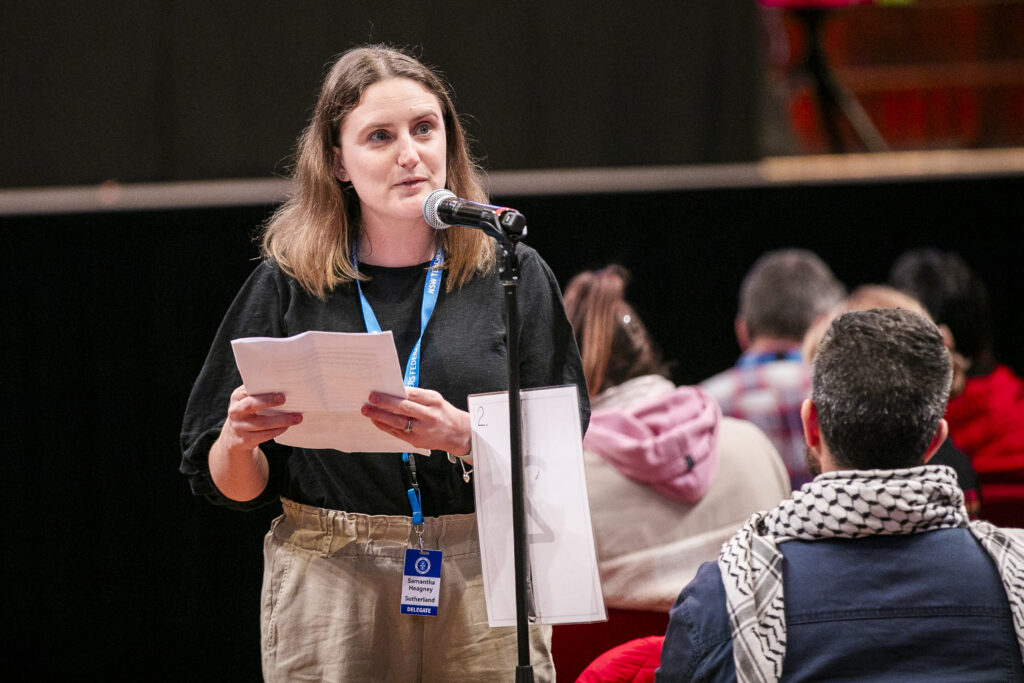
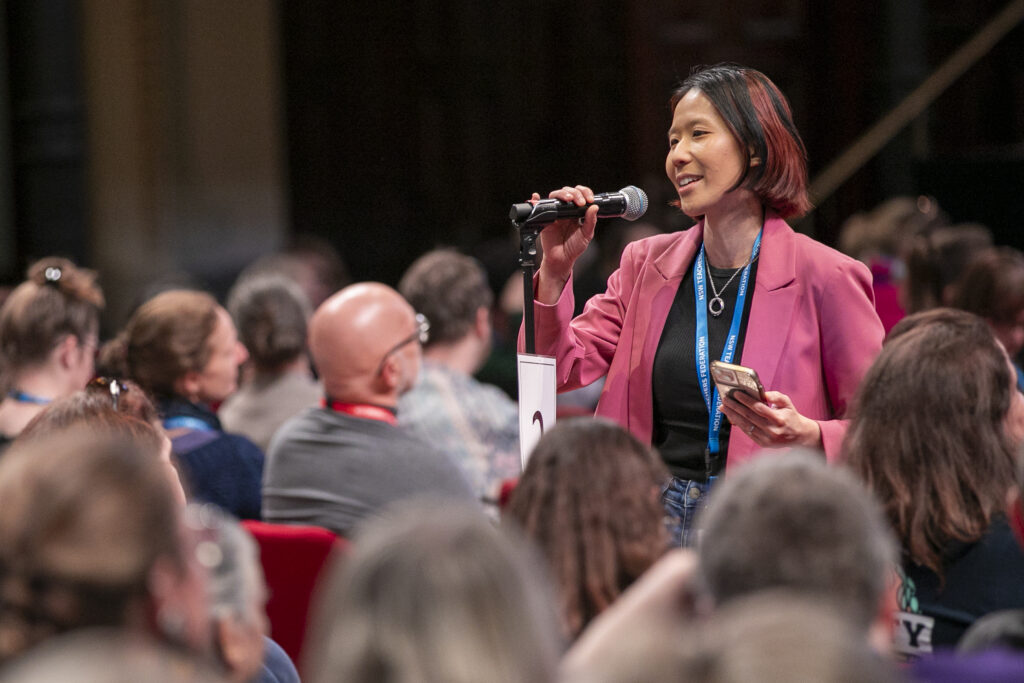
Across several sessions at Annual Conference, delegates discuss motions initially proposed by members at local association meetings.
The order in which they are discussed is determined by a ballot of the delegates.
Reducing teacher workload was a key feature of motions at this year’s conference. Of particular interest from delegates was the need to ensure the Department is held accountable to its election promise to reduce the administration work of teachers.
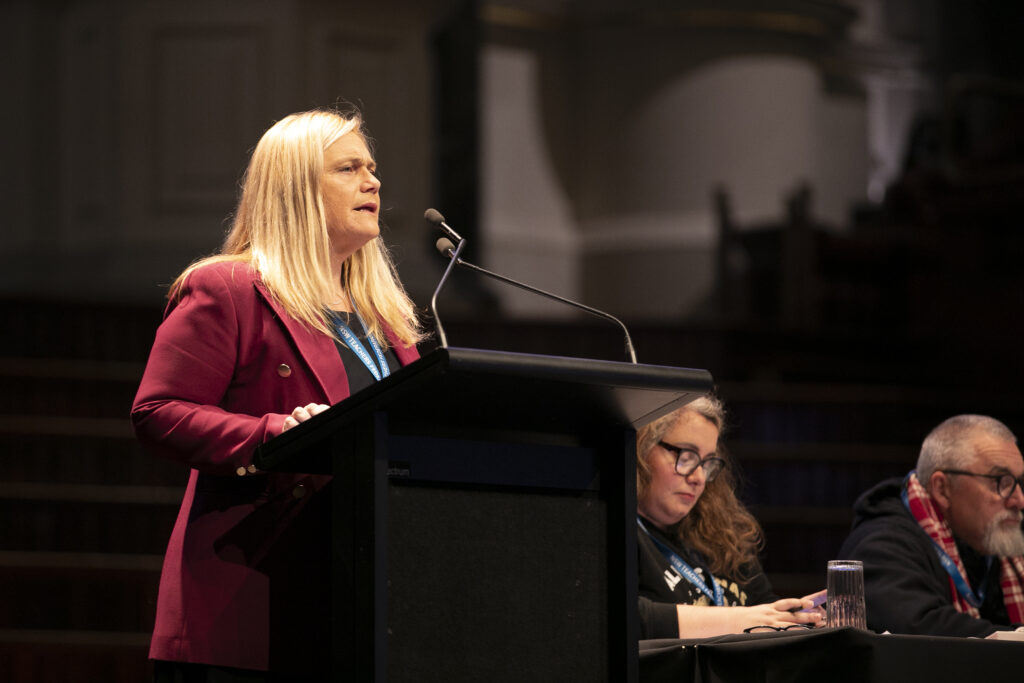
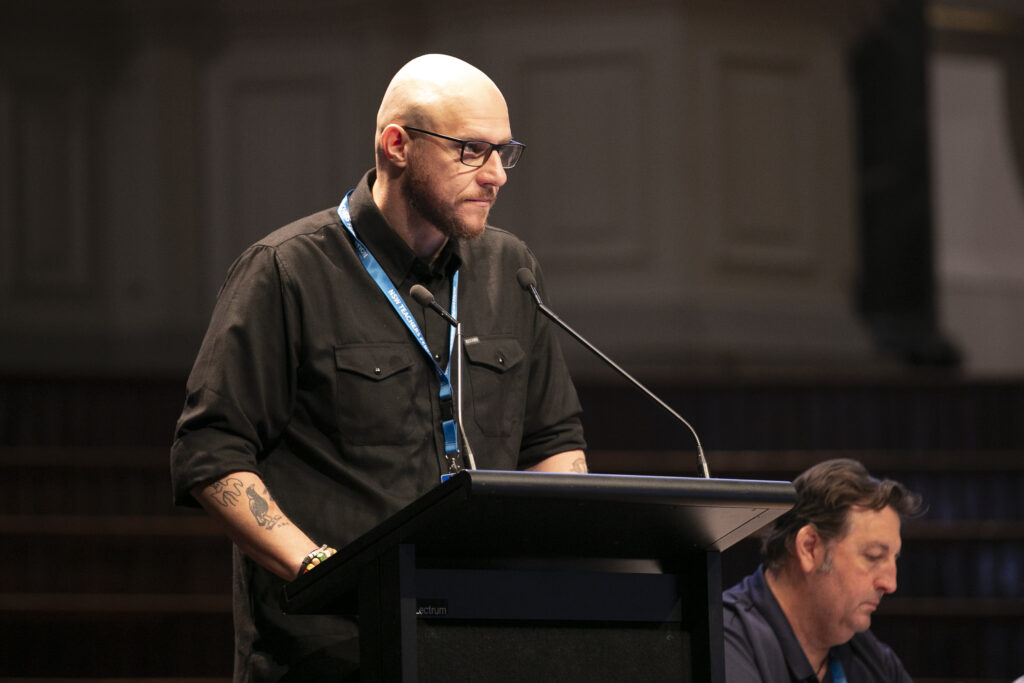
Social inclusion and cohesion in public education settings
Advancing social cohesion and inclusion outcomes in public schools and TAFE communities were raised at Annual Conference Monday.
“Teachers remain at the frontline of both the manifestations of declining social cohesion and important agents in contributing to arresting that decline,” Deputy President Amber Flohm said.
Failure to implement legislative and policy requirements by the Department Education and TAFE remain a significant barrier to progressing social inclusion and cohesion.
Annual conference authorised a number of actions to ensure that students, teachers and the system had the enabling resources and support to embed long and sustained change in this critical area.
Belonging, worth, social inclusion and justice, participation and discrimination measures were reported on, alongside self-sustaining systems of racism and systems responsibilities.
“Social division and inequality remain the most powerful of threats to social inclusion. There is a fundamental role that the Federation membership can play to contribute to the of advancing social inclusion and cohesion outcomes in our public school and TAFE communities; this is our place, these are our values.”
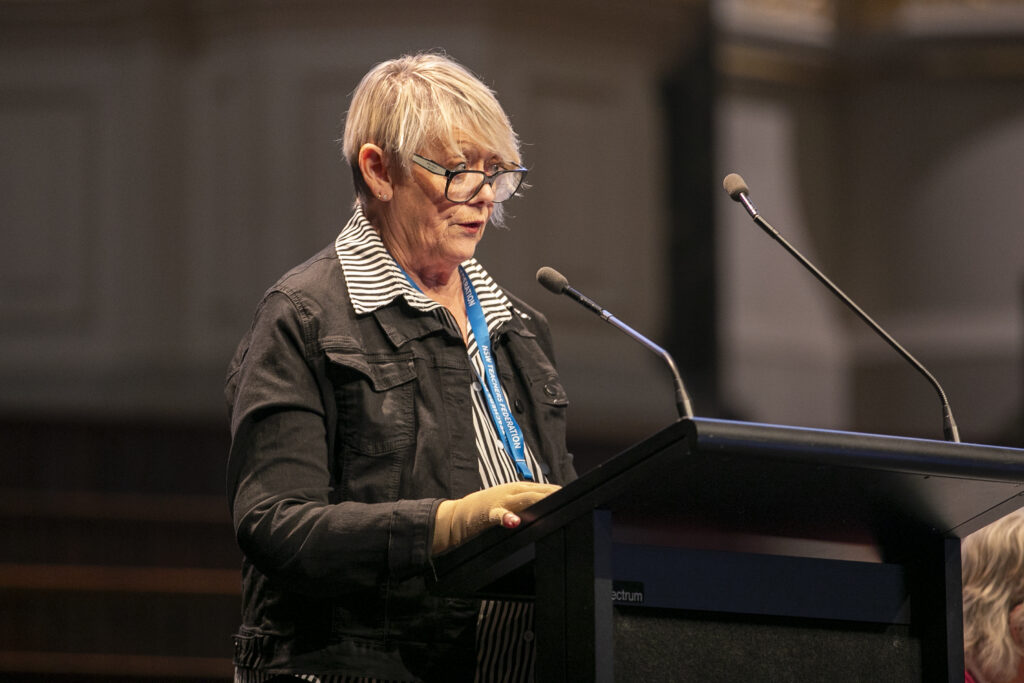
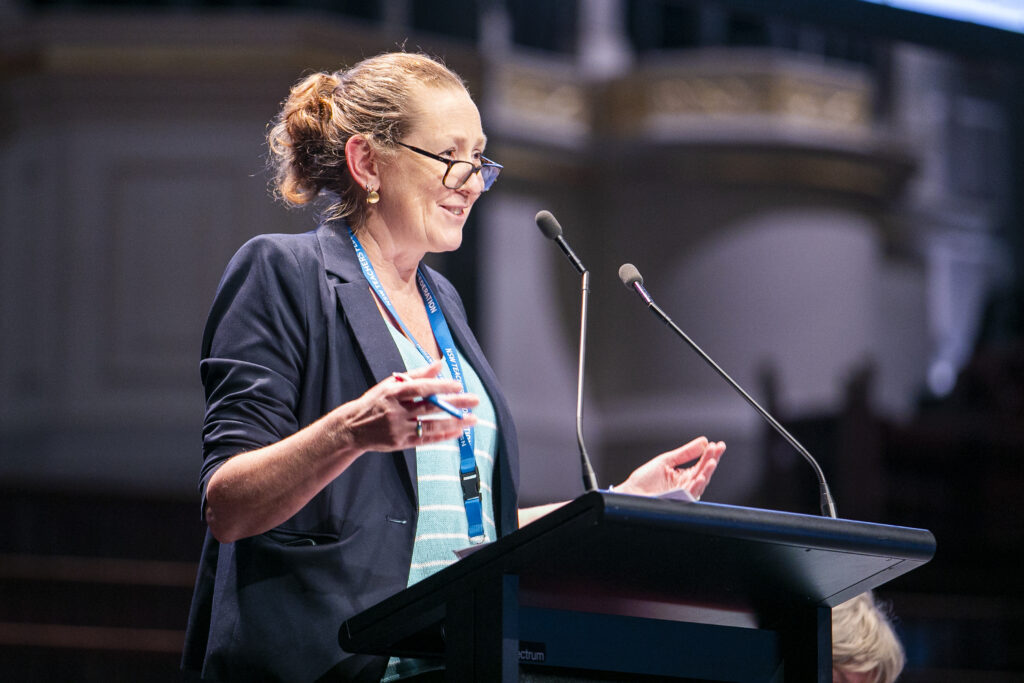
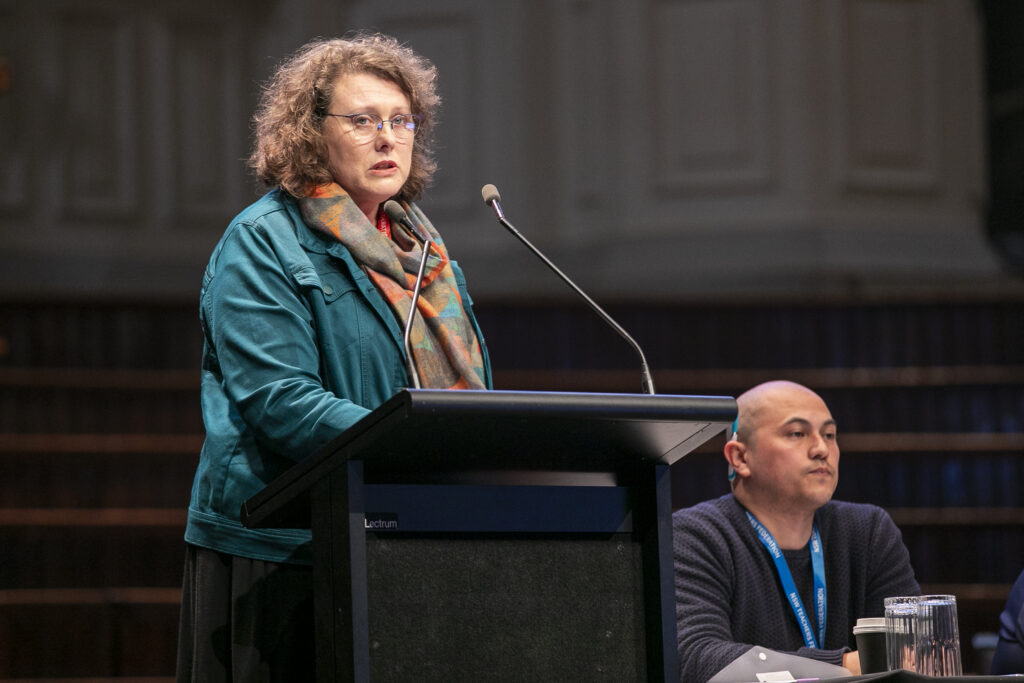
Federation’s ongoing commitment to affirmative action was at the fore with the adoption of an updated version of longstanding policy.
Following a comprehensive review, the 2024 Affirmative Action Policy commits Federation to implementing effective and measurable actions for change, based around:
- equity priorities for leadership, diversity, intersectionality, recruitment, training, retention, promotions and accountability within Federation and public education workplaces
- workplaces safe from gendered violence or harassment, sexual harassment, sex-based harassment, discrimination and bullying.
Progress will be routinely monitored and reported back to members.
Women’s Coordinator Leeanda Smith presented to Conference on the progress of seven key themes, including safety and equity in the workplace.
Vice President Jenny Mace said the policy was needed to create a level playing field. “By removing systematic barriers, affirmative action policies empower women and others to pursue their aspirations with confidence.
“Affirmative action is not about unfair advantage but rather, providing more equitable access for all.”
Affirmative action in context
Prior to the formal adoption of an Affirmative Action Policy at the 1979 Annual Conference, Federation acknowledged the United Nations declaration of 1975 as the International Women’s Year with a resolution on the Rights and Status of Women in Education.
The original Federation policy sought to “promote the status of women to one of equality with men and to compensate women for past discrimination”. It established opportunities for women’s employment and promotion across the public school and TAFE systems and representation in all Federation structures.
In 1986, the policy was amended to specify the need for proportional representation of women in Federation structures. It was also the year the Commonwealth’s affirmative action came into effect.
The 1986 Affirmative Action Act was superseded by the 1999 Equal Opportunity Act, which was in turn replaced by the 2012 Gender Equality Act.
The NSW Anti-Discrimination Act 1977 is only now under review by the NSW Law Reform Commission.
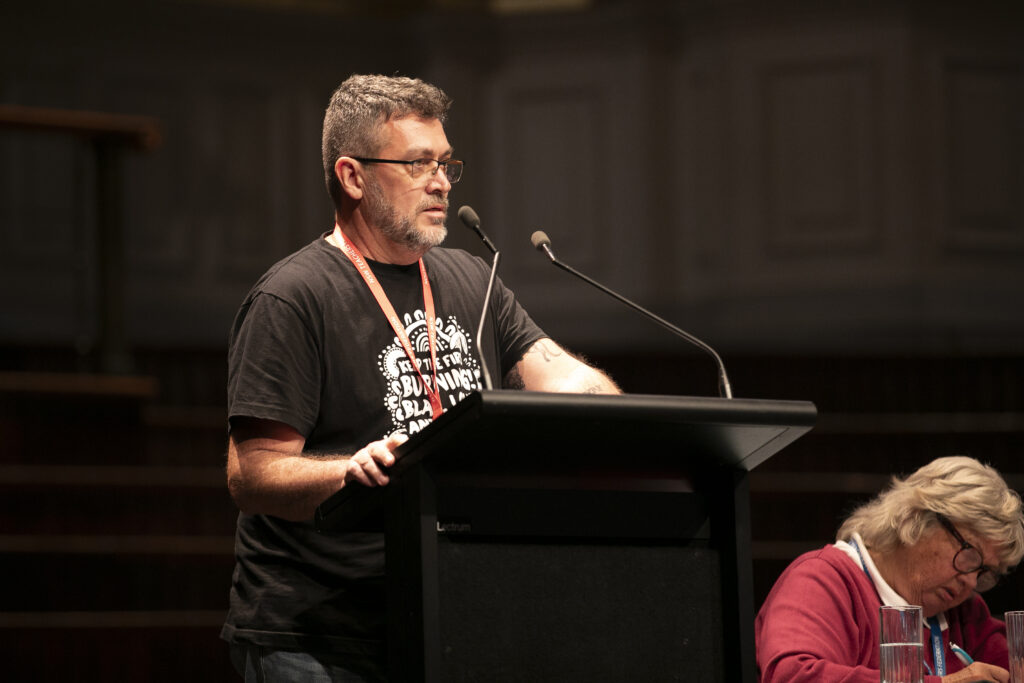
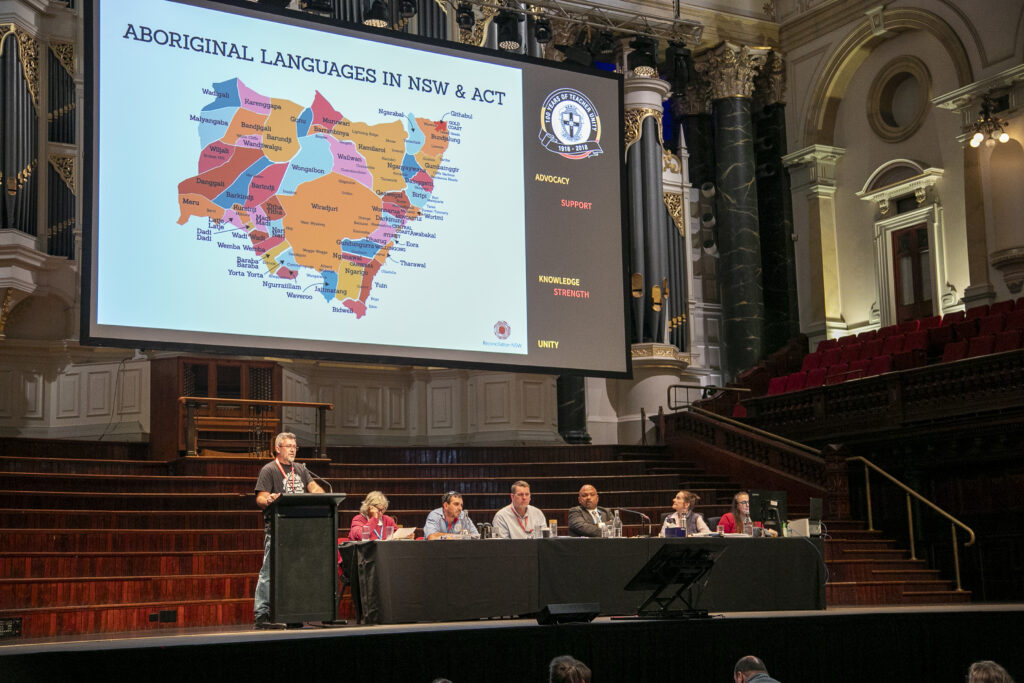
YES to continuing the fight for Voice, Treaty, Truth
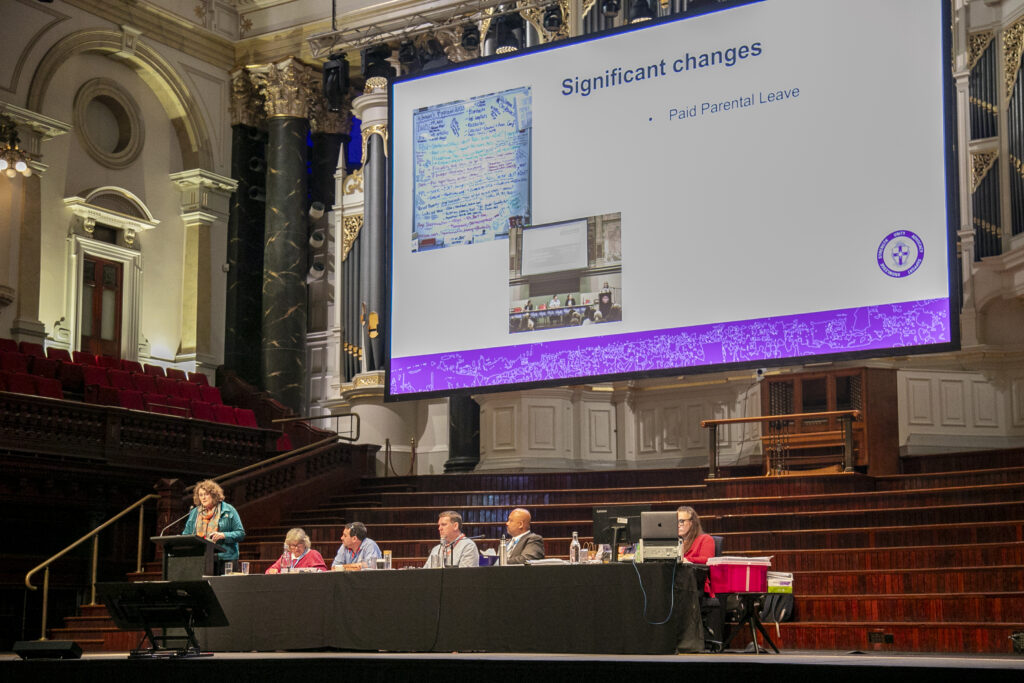
Aboriginal Education Coordinator Russell Honnery titled his report to Conference ‘The year that should have been the YES vote’ and noted 75 per cent of Aboriginal and Torres Strait Islander peoples and 78 per cent of teachers voted ‘Yes’.
As educators, he said, we cannot give up the Voice, Treaty, Truth fight: “It is not over.”
Pointing to the increase in racism since the referendum, Mr Honnery said it was reflected at this year’s “Blak and Proud” Aboriginal and Torres Strait Islander Members Conference, where the most popular session was a mental health workshop designed by specialist organisation 13 Yarn.
Federation’s campaign work ahead is based on the 10 Gari Yala truths in the Jumbunna Institute of Indigenous Education and Research report, Making our words and actions meet. The report informed Federation’s Aboriginal and Torres Strait Islander Education Policy, adopted on day one.
Yesterday also marked the start of NAIDOC Week. Mr Honnery mentioned standing on the shoulders of his predecessors, Anthony Ammatto, David Prosser, Pam Koeneman and Charline Emzin-Boyd, with regards to the 2024 theme: Keep the Fire Burning! Blak, Loud & Proud.
Building capacity and addressing regression
Women’s Coordinator Leeanda Smith told Conference the women’s program continues to address pathways to representation and provide access points to make sure women’s voices are part of Federation process.
The recent review of the union’s Affirmative Action Policy, which was adopted today (Monday) (see article on this page), helped to further identify structural barriers.
Current pressing issues are about safety, Ms Smith said, noting the toxic behaviour women teachers experience and citing the need for the recommendations of the Australian Human Rights Commission’s Respect@Work report to be implemented.
There has been progress of late, for example with the amended sexual harassment laws and the introduction of coercive control laws. The increasing prevalence of employers offering leave for those experiencing or fleeing domestic and family violence is another achievement.
Reproductive leave is one of the next issues to address, to bring NSW in line with more comprehensive legislation in other states. “NSW currently only has five days fertility leave.”
Ms Smith warned the achievements made towards women’s equity are being simultaneously eroded. “For all achievements, there is regression.” Among the examples she cited were the recent release of Australian Bureau of Statistics figures showing the 12th successive rise of sexual assaults across the nation. “The number of incidents was the highest recorded in 31 years of ABS data.”
While the World Economic Forum estimated it would take 134 years to negate gender pay gaps at the current rate of progress, Ms Smith noted that in Australia, consulting firm Deloitte recently argued that dealing with gender bias is good for the economy and called on the NSW Government to review all its policies for gender impact.
To finish, Ms Smith emphasised that while we need to continue to build capacity to address regression, we should also celebrate our achievements and the sense of belonging the union provides.
Eliminating racism, promoting human rights through education
Multicultural Officer Mandy Wells discussed how Federation is “on the right side of history” in advocating for the pursuit of equity and social justice.
“Federation develops strong policy positions critical to building a fair and just society. It is through education that we hope to eliminate racism and remove the barriers that deny equal rights,” Ms Wells said.
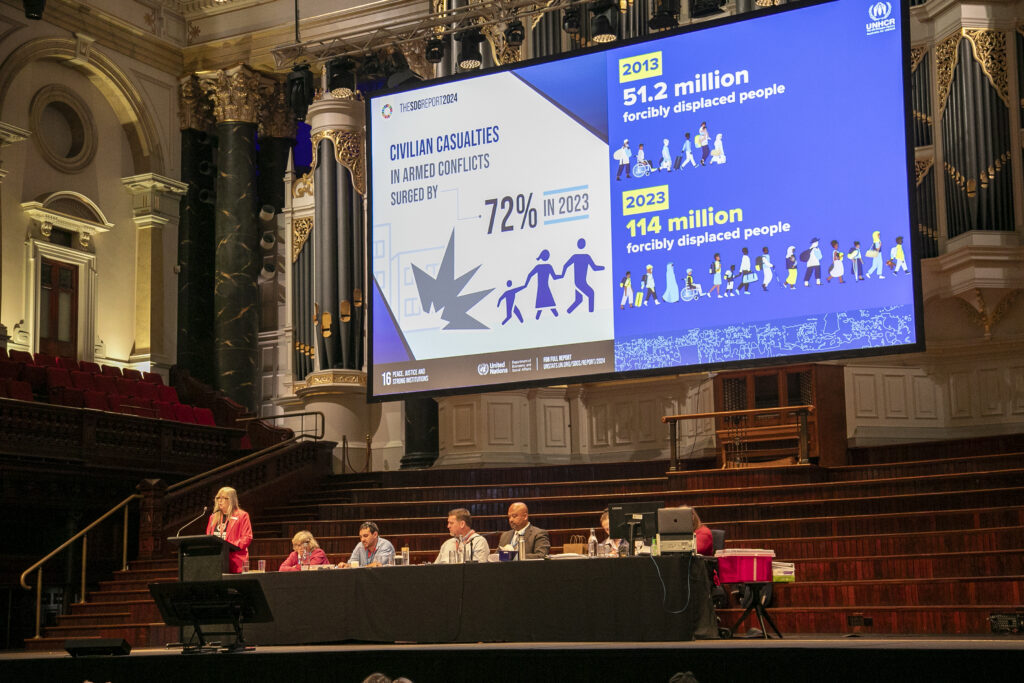
She pointed to the pressure on public education teachers to teach refugees and asylum seekers who do not have English as a first language. She noted the high concentration of diverse language backgrounds of students in western and south-western Sydney schools, where government funding does not cover the resources teachers in those schools need for their students.
“Our Federal Government campaign is what will lead to change,” she stressed, referencing the For Every Child campaign for the full funding of public schools.
“It is through collective strength and unity that we will continue to achieve our goals.”
See the social justice page for more.