

Day three of Annual Conference opened with a performance by Kirrawee High School student Max Fernandez. The morning session heard from guest speakers before Conference endorsed a major campaign on teachers’ work, health & safety to address teachers’ workload. Motions brought to Conference directly from local associations were also debated.



Agency needed in decisions on AI
“What is the artificial intelligence (AI) that teachers and teaching deserve?” should be asked as part of the discussion about generative AI, Annual Conference delegates heard today (Tuesday).
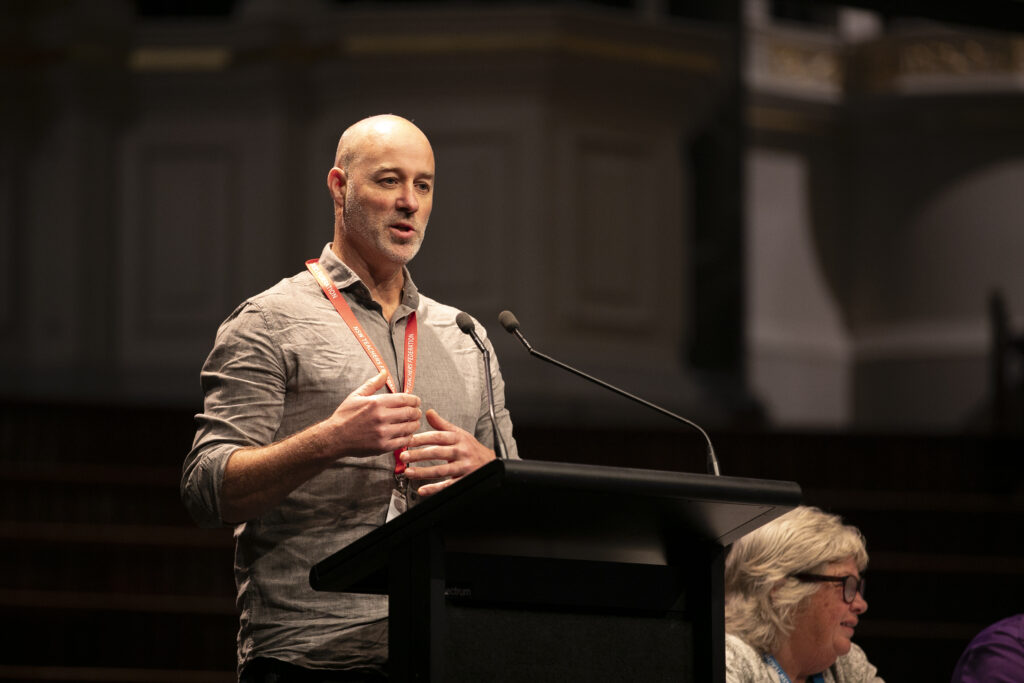
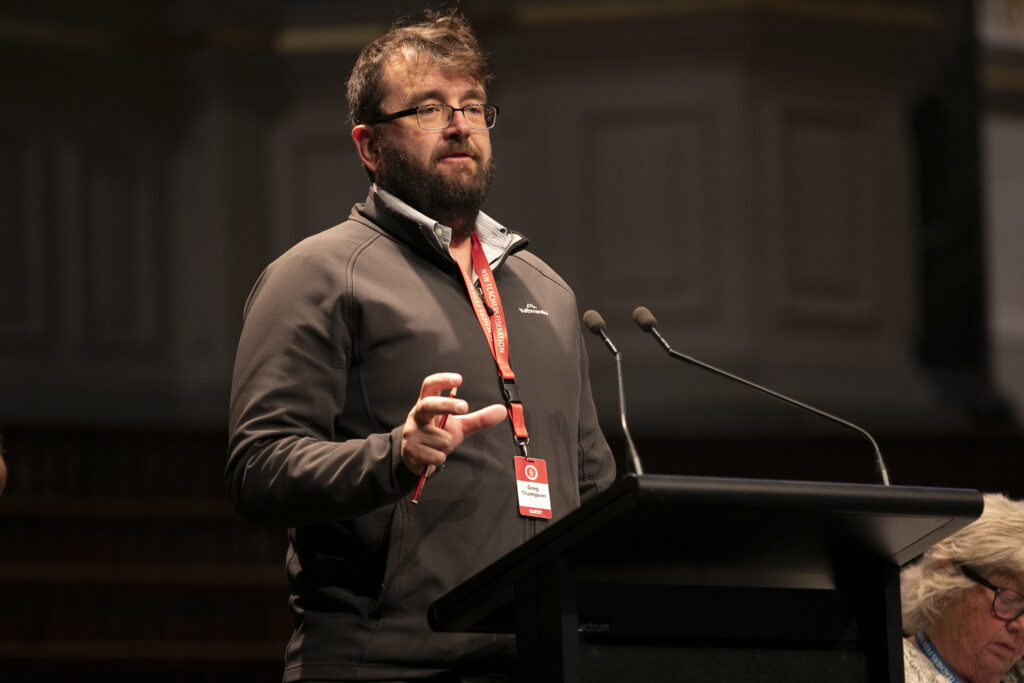
Teachers should be given the opportunity to consider what’s most useful to them in their context, said Professor of Education Research Faculty of Creative Industries, Education and Social Justice at Queensland University of Technology Greg Thompson.
Associate Dean of Research, Education Futures Studio, Sydney School of Education and Social Work at Sydney University Professor Kal Gulson said teachers should be given capacity to have a discussion about AI and put forward alternatives.
The professors are part of a team of researchers who were commissioned by the union to uncover teacher and school leader perspectives and explore their experiences with generative artificial intelligence (AI).
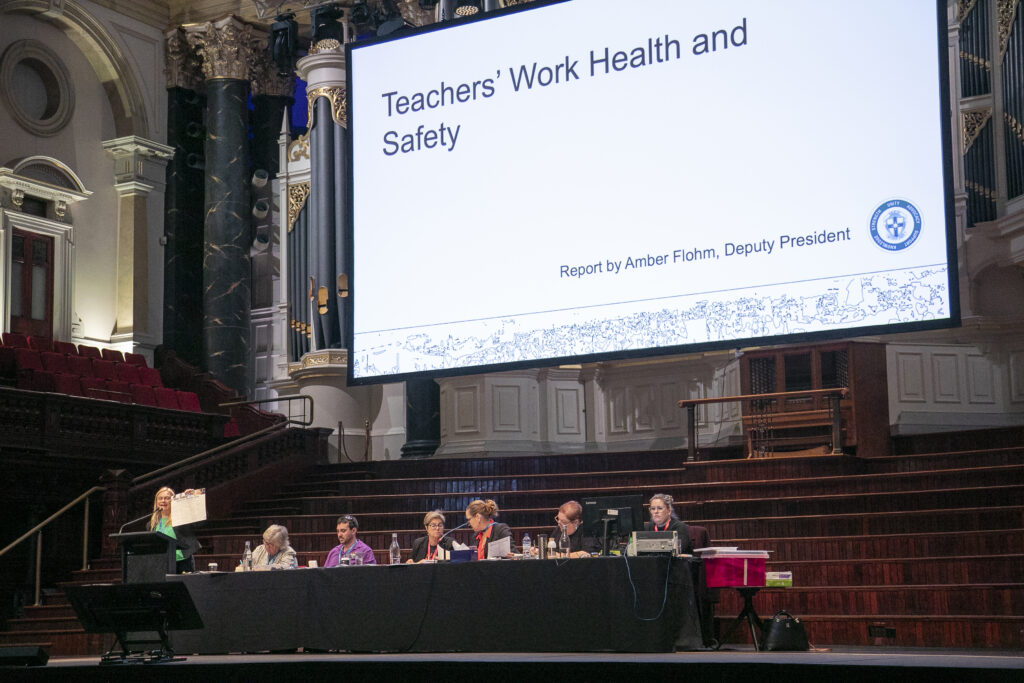
Underpinned by the health and safety of members and the need to attract and retain the teaching profession, as committed to by the NSW Government and Department, today annual conference delegates endorsed a major campaign to address teacher workload.
Changing the nature of teachers’ work must directly correlate with a fundamental and seismic change of culture.
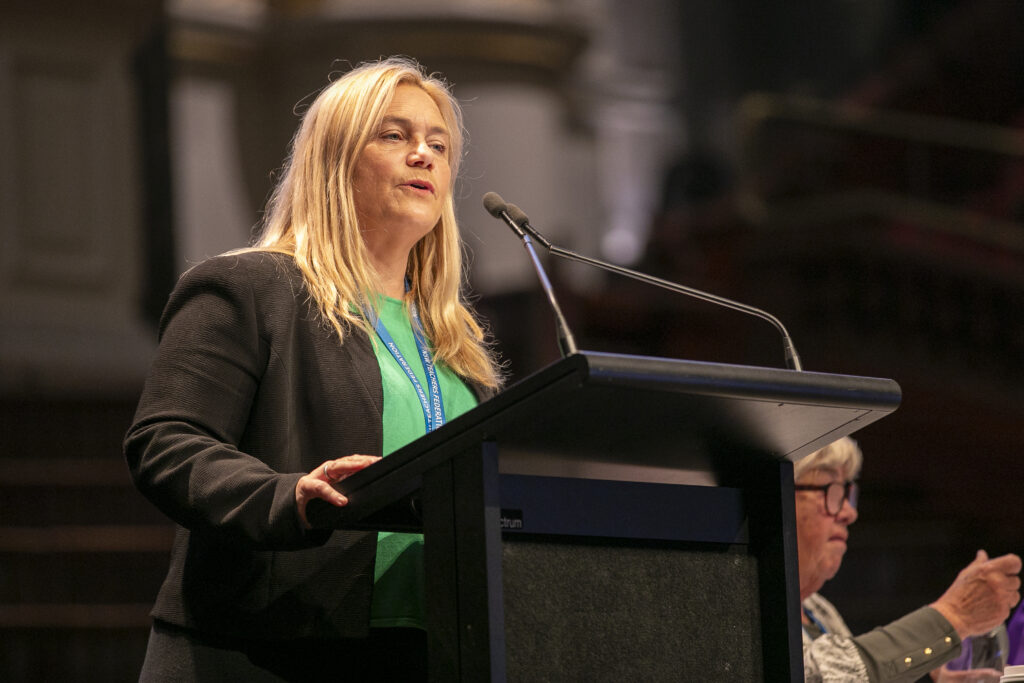
Federation Deputy President Amber Flohm said the analysis of the ‘core work’ of teachers and schools and decoupling workload from work intensity will underpin this strategy.
“Activating the membership to ensure that deprofessionalising and deskilling of the teaching profession does not take hold in the name of ‘reducing administrative burden’ will be fundamental.
“Curriculum, including assessment, and pedagogy remains essential to not only the intrinsic value of teachers’ work, and thus the attraction and retention of the teaching profession, but the educational and social development of the students we teach and the growth of public education in NSW.”
Debated and endorsed actions include but are not limited to the following:
- maximum time for meetings
- short statewide survey of the membership on tasks undertaken outside face-to-face teaching
- Federation Workplace Committees ‘workload audits’
- Fact sheets for working conditions in the areas of workload, teachers’ health and safety, including the right to disconnect
- central campaign resources for use by officers and members to support all members
- statewide campaign strategy and action on workload, teachers’ work and associated working conditions.
“Both the psychological and physical health and safety of teachers is not only fundamental to individual health, job satisfaction and overall fulfillment, but a determining factor of the system’s capacity to attract and retain the public education teaching profession our students deserve,” Ms. Flohm said.
Critical time ahead to secure funding for students with disability
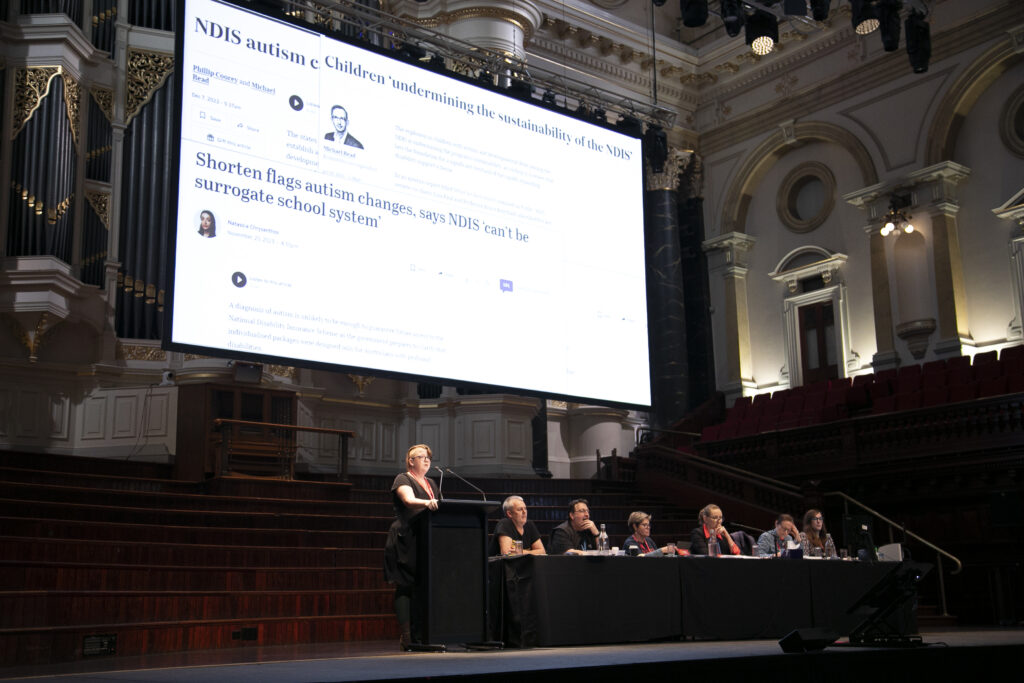
“Now is a time of great importance and of great hope for the future of students with disability in our schools,” City Organiser and officer with carriage of special education Emma Bruce said.
“It is also a time of complex work, with many moving pieces.”
The moving pieces include responses from governments to the Royal Commission into Violence, Abuse and Neglect and Exploitation of People with Disability, which directly impacts on the education sector and potentially interacts with the National Schools Reform Agreements.
The National Disability Insurance Scheme review and NSW Legislative Council Inquiry into Children and Young People with Disability in NSW Educational Settings are also key considerations. “It is important that we await the responses to these reviews before committing to decisions as a union,” Ms Bruce said.
Meanwhile, the significant matter of funding reform remains unresolved, despite the urgent need for governments to act to close achievement gaps, improve the wellbeing of students and address growing teacher workload and staffing shortages.
“Why is that important for Students with Disability in particular?” Ms Bruce asked. “Well, I don’t need to tell you. You told us, in the 2024 State of our Schools survey. The results should be shocking but are, sadly, not surprising.”
Relevant findings from the survey include:
- only 5 per cent of teachers believe their school is well-resourced when it comes to delivering the education programs students at their school need
- more than three quarters (77 per cent) of principals surveyed said students with disability or learning difficulties would benefit the most from additional funds provided if their school was funded to 100 per cent of the Schooling Resource Standard
- 79 per cent of principals said full funding would provide teachers with additional classroom support when teaching students with disability or learning difficulties.
In terms of what teachers need, this translates to:
- support in the classroom
- specialist support
- specialist classes
- dedicated programs.
Developments over the next 12 months will be crucial. “It is an exciting time, and one that will require a steady hand, strength and discipline if we are to achieve the necessary outcomes that have been so clearly called for.”
LGBTIQA+ report: Department is not doing enough
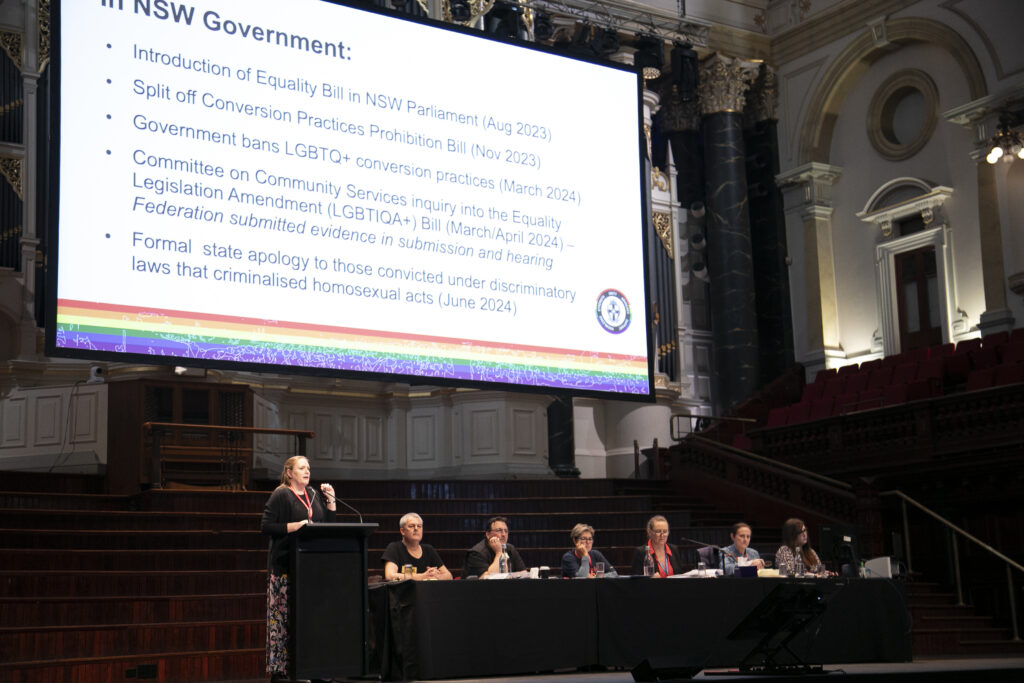
The NSW Department of Education is “doing stuff but it’s not enough” for LGBTIQA+ teachers, Officer attached to LGBTIQA+ issues Mel Smith told Annual Conference.
While LGBTIQA+ staff are acknowledged in the Department’s Diversity, Inclusion and Belonging Strategy, school teachers scored at least five points lower than their colleagues in every wellbeing question in its People Matters survey. TAFE teachers’ results were only slightly higher. “That means something is not good enough.”
Despite the results, the Department is rated a silver tier employer. “I wonder how, when LGBTIQA+ people don’t have a policy and the tier depends on it?” Ms Smith asked rhetorically.
“There is no strategy, policy, funding or resourcing.”
Federation recently wrote to the Department to say they need to do better and is awaiting a response.
Ms Smith acknowledged the Department does support LGBTIQA+ staff in other ways, for example by encouraging participation in Wear It Purple Day and the International Day Against Homophobia, Biphobia and Transphobia (IDAHOBIT).
Meanwhile, the union continues to support individuals experiencing homophobia in schools, such as when a parent complains about a male teacher who mentions their husband. Ms Smith also noted schools receive complaints about students who identify as gay, asking for them to be removed from classes.
Concluding her report, Ms Smith commended members in Hay, Kempsey and Lismore, who are working to increase visibility regional areas.
CPL courses and JPL articles offer access to evidence-based research
Centre for Professional Learning (CPL) director Kate Ambrose’s report was a call to action in response to the proliferation of the right-wing attitudes framing education research and multi-faceted attempts to deny teachers access to evidence-based research.
The Australian Education Research Organisation (AERO) recently discredited inquiry-led learning in the media, echoing the sentiments of the Centre for Independent Studies.
“Neither of those organisations reference research … which emphasises that inquiry-based learning is actually heavily scaffolded and that explicit teaching is actually an essential factor of inquiry or problem-based learning,” Ms Ambrose said.
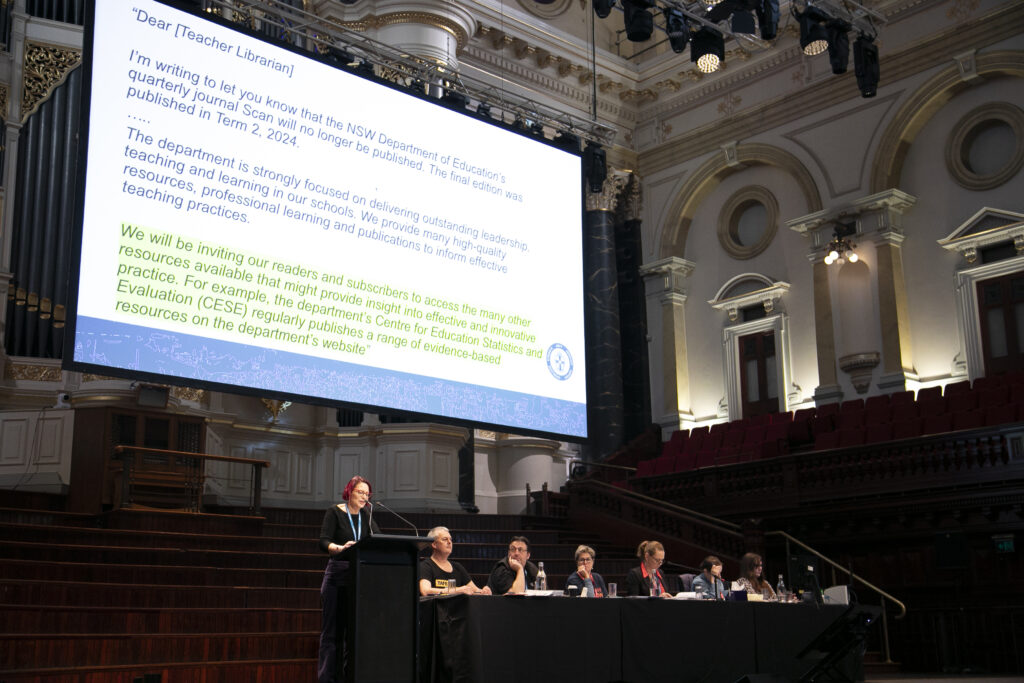
Meanwhile, the Department of Education has discontinued the publication of SCAN, a journal for teacher-librarians established 42 years ago, directing readers to its own Centre for Education Statistics and Evaluation (CESE) research as an alternative.
While SCAN provided “a space for bridging theory with practice”, CESE’s evidence-based resources often cite research that does not take the social context of the school into account. “This is a way to discredit the teacher as a researcher and to blame the teacher for the consequences of school segregation that Michael Sciffer referenced [earlier during conference].” (See Equality, excellence and equity for the public education system in the day two roundup)
Ms Ambrose encouraged delegates to push back against the system and pointed to CPL courses and the Journal of Professional Learning (JPL) as a viable alternative for sharing research.
There can be no social equality without academic excellence for all, Annual Conference declared today (Tuesday).
“Federal and state governments must ensure that all citizens can fully participate in society and achieve their human potential,” the Annual Conference decision The public education system — equality, excellence and equity states.
Federation demands:
- governments ensure funding, legislation, regulation, policy and programs deliver public education as the preeminent, desirable, and dominant system of education for all young people regardless of economic or social class, location context or ability
- education provision that enables equality and academic excellence for all students, including students with a disability and students in regional, rural and remote areas, will be pursued
- governments introduce structural reforms that increase public education’s enrolment share and equal distribution of public education students from each socioeconomic quartile.
Senior Vice President Natasha Watt said federal funding and school choice policies had fractured our society.
On Monday (the first session discussing the recommendation), Executive member Michael Sciffer said Australia had created a ghetto society, with students largely attending public, Catholic, independent and selective schools along class lines.
Campaign to promote public education
Federation is to develop a generational campaign to re-establish the leadership and pre-eminence of public education in NSW.