

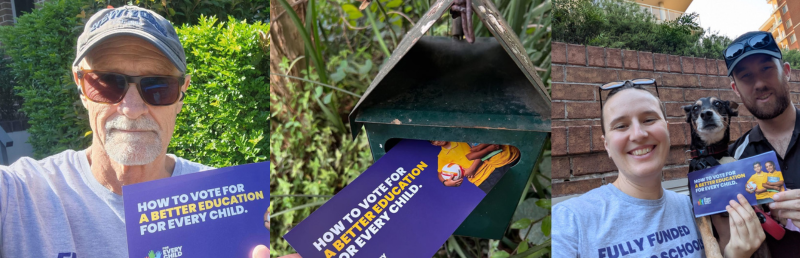
If you want to make a positive difference in the NSW public education system, one of the most effective ways to do it is through active participation in the NSW Teachers Federation.
You’ll join with like-minded teachers to identify the working conditions that need improving and collectively campaign for their implementation.
How to get started
Once you have joined Federation, there are many avenues you can take to get engaged in the union:
Workplace meetings
Financial members are entitled to discuss issues affecting their work, community and students. You can move, amend or vote on motions that inform the work and direction of the union.
Campaign activities
Our campaign actions seek changes to government and departmental policy that will improve teachers’ working lives. You can find out what’s planned via your Federation Representative, emails and social media. See our website for information about our current campaigns.
Local Teachers Association meetings
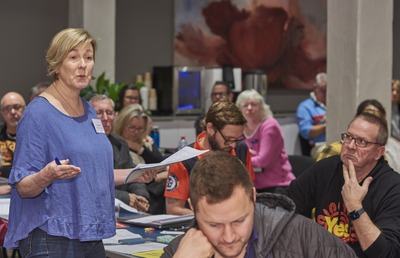
As a financial Federation member, you can attend and participate in your local Association meetings — the main forum for members in your area — to discuss and vote on union issues.
Association meetings:
- provide regular opportunities to share information with colleagues
- help you network with teachers in your area
- help create social connections
- are a great place to develop new skills such as public speaking
- are an opportunity to reach your Organiser
- are a forum to influence Federation’s policies and direction.
Check Federation’s events calendar for the date of the next Association meeting in your area.
Special interest groups
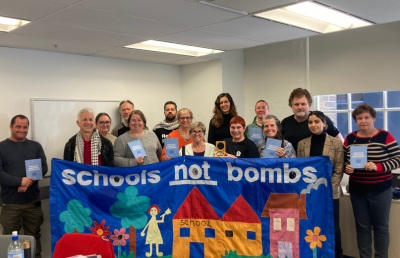
Members come together to provide advice to Federation concerning policies in a wide variety of interest areas such as:
- sport
- LGBTIQA+ advocacy
- swimming and water safety
- peace and environmental justice.
If you’re interested in a topic covered by a Special Interest Group, you are welcome and encouraged to join.
Representative forums
Federation Workplace Committees
You may consider standing for one of your Federation Workplace Committee’s elected roles: Federation Representative, Women’s Contact or Federation Workplace Committee member.
Committee members:
- consider and negotiate a range of everyday issues and concerns at the workplace level
- monitor the implementation of agreed policies that affect the working conditions of members at the workplace, such as the Staffing Agreement and Award
- recruit new members and encourages 100 per cent financial membership
- assist in the promotion and running of Federation meetings
- ensure the workplace is represented at the local Association meeting.
Local Teachers Associations
Each Association has several elected positions, such as President, Secretary, Treasurer, Women’s Contact, Vice President, Minutes Secretary, Aboriginal Education Contact, Casual Employment Contact, Peace Activist Contact, Special Education Contact, New Educator Contact, LGBTIQA+ Contact, Teacher Housing Contact, Anti-Racism Contact and Environment Contact.
State Council
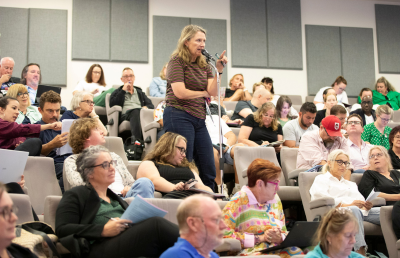
Members of each Teachers Association elect Councillors to represent their area at state Council, which meets in Sydney at least eight times per year to hear reports from Federation officers and discuss issues affecting the profession. Six Councillors are also elected from the Aboriginal Members Roll.
Councillors may ask questions, propose amendments to recommendations, debate and vote on motions and amendments.
If you are a country member, you can apply to attend a Council meeting as an observer through the New Activist Country Observer Program. Women whose Association is represented by only male councillor(s) may apply to attend a Council meeting as an observer, as part of the Country Women’s Observer Program.
Restricted committees
Restricted committees are elected by Council to work on particular areas of policy.
Examples of restricted committees include, but are not limited to:
- Aboriginal Members
- Distance Education
- LGBTIQA+
- Women’s and Anna Stewart Program.
A committee’s membership may be restricted by a number of criteria (including gender, workplace, identity etc.) to ensure appropriate representation. Criteria are considered and determined by Council.
Annual Conference
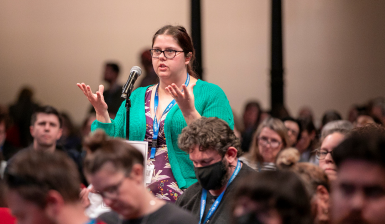
Annual Conference is Federation’s peak decision-making body.
Delegates usually meet in Sydney for three consecutive days during the winter school holidays.
The conference is attended by:
- Presidential Officers
- Professional Officers
- Councillors (as automatic delegates to Annual Conference)
- additional elected delegates.
Executive
Federation’s Executive — consisting of the Presidential Officers, four Vice Presidents, one Aboriginal member, two Custodians and eight Association representatives — meets fortnightly during term to discuss the implementation of decisions arising from Council and Annual Conference and items that emerge between Council meetings.
Aside from Presidential Officers, the other members of Executive are elected by Federation Councillors for a one-year term.
Aboriginal and/or Torres Strait Islander members may wish to put themselves forward to be considered for the position of Aboriginal Observer to Executive. Contact the Aboriginal Education Coordinator for details via aboriginaleducation@nswtf.org.au.
Officer positions
Presidential Officers (President, Deputy President and Senior Vice President) are elected for a two-year term by all members.
The General Secretary and the four Deputy Secretary positions are elected by Council.
Professional Officers, elected by Council, are responsible to the General Secretary for the implementation of the decisions of Annual Conference, Council and Executive. Relief Professional Officers can be asked to relieve in a wide range of positions within the union.
Any financial member is entitled to nominate for the positions.
Training and support
If you want to get more involved in your union, Federation has a range of courses, conferences and programs that help you learn more about the work of the union.
Trade Union Training
Federation offers courses, seminars and conferences to support and develop skills for Federation’s elected roles. Find out more on our website.
Anna Stewart Program
The Anna Stewart Program is aimed at developing the skills, knowledge and confidence of women members and empowering them to be actively involved members in the workplace, at local Association or state level. Participants are given the opportunity to work with Federation Officers, attend state Council and associated meetings, and observe Federation campaigns to develop an understanding of the processes and practices in our union operations and dealings with the Department of Education and TAFE NSW. Find out more on our website.
New Activist Conference
The New Activist Conference is held annually for teachers in their first five years of teaching (or first 10 years if they hold a Federation position) who are interested in becoming more active in Federation.