

Guest speakers Anna Hogan and Amanda Kay
“Rising workloads, declining morale and a growing sense that the system is no longer working for the people in it.”
That’s the legacy of the former NSW Liberal-National government’s Local Schools, Local Decisions (LSLD) public education policy, according to two leading education experts.
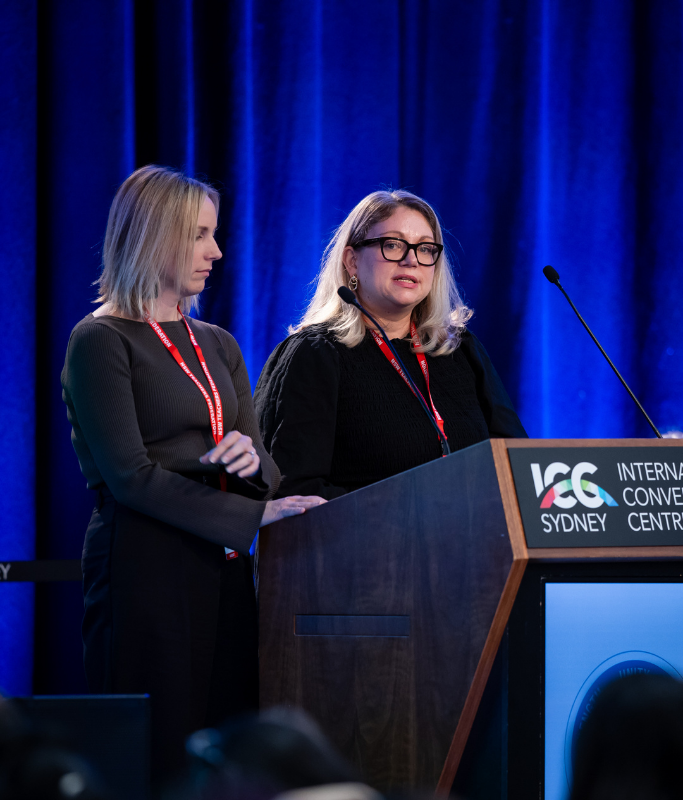
Queensland University of Technology associate professor Dr Anna Hogan and senior lecturer in education at Griffith University Dr Amanda McKay told Annual Conference delegates that NSW’s public education system required “a fundamental shift in how we think and talk about what schools are for and what we expect of educators today”.
“Our research has shown that teachers and school leaders around the country are working in systems that have become increasingly fragmented and burdened by layers of compliance and administrivia that pull you away from the core of your work: teaching and learning,” Dr McKay said.
“The promise of autonomy has often translated into isolation, with schools expected to do more with less and educators left to navigate complex demands without the support of a cohesive system.”
Hogan and McKay’s research found that LSLD forced teachers and principals into “survival mode,” pressured public schools into competition with each other over shrinking resources and deepened the divide between affluent and disadvantaged school communities.
“LSLD didn’t address structural inequalities, it reframed them as individual leadership challenges,” Dr Hogan told delegates. “We continue to rely on the myth of infinite teacher resilience, the idea that teachers will simply ‘make it work’ no matter the structural barriers.”
This led to burnout and rising job dissatisfaction among teaching staff, who felt “they can’t get to the core of their work”.
“This isn’t just a question of having too many tasks or too few hours: it’s a deeper attack on professional purpose and identity,” Hogan said. “Teachers enter the profession to teach, to build relationships, to nurture curiosity and critical thinking, not to function as administrators or wellbeing workers.”
While Federation has done a great deal to dismantle LSLD, including through the landmark agreement with the NSW Government as part of the 2024 Schools Award, McKay and Hogan argued there was more work to be done to repair the damage.
To combat the disastrous legacy of LSLD, Drs McKay and Hogan called on state and federal governments to “lift the public system —— not just in terms of infrastructure and funding, but in reimagining the purpose of schooling and the way we do it”.
“We need urgent, large-scale investment from both federal and state governments to provide safe, modern, fully equipped schools,” Dr Hogan said.
“This is not just about bricks and mortar. It’s about enabling a full, rich curriculum that is appropriately resourced with innovative materials and technologies, and guaranteeing that every child, regardless of postcode or background, can learn in a quality environment.”
Guest speaker: Michele Bruniges
Somewhere along the way, our national identity of a fair go becomes an illusion, Dr Michele Bruniges told Annual Conference delegates.
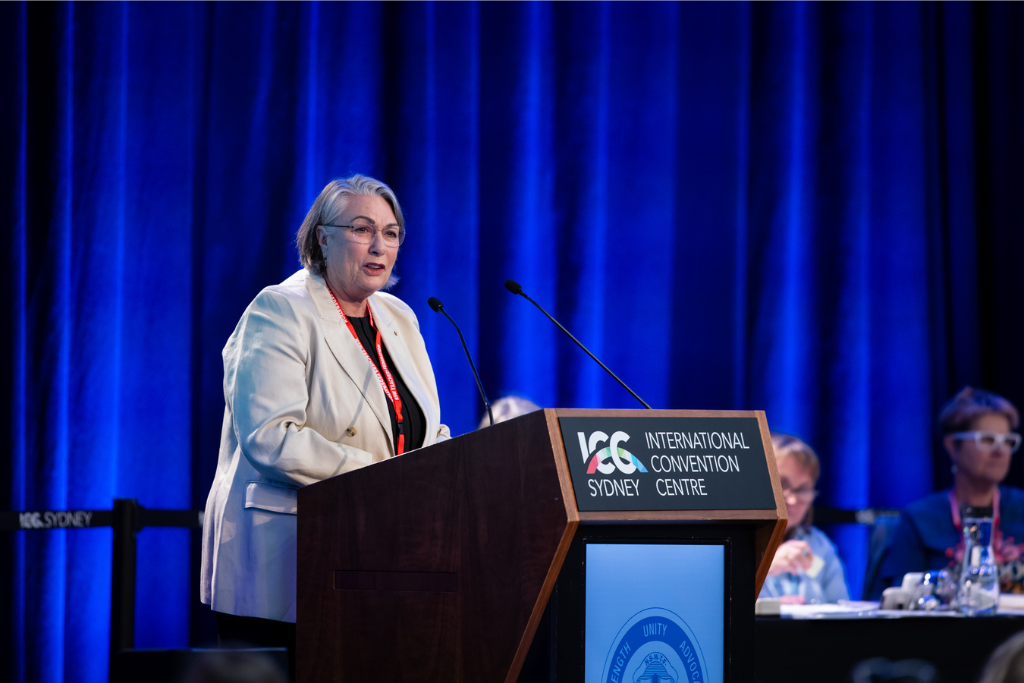
Dr Bruniges, a former secretary of both the NSW and Commonwealth departments of education, has been researching schools with high concentrations of disadvantaged students.
“Our rhetoric does not reflect reality and the key facts and findings present a challenge for all of us,” Dr Bruniges said.
“The reality is that our education system does not deliver the same educational opportunities and support for every child.”
Government schools carry a disproportionate load of schools with a high concentration of socio-educational disadvantage. 50 per cent or more of NSW public school students fall in the lowest quartile of the Socio-educational Advantage scale.
In 2023, government schools made up 68 per cent of all schools in Australia yet they made up 94 per cent of schools with a high concentration of socio-educational disadvantage. NSW government schools made up 97 per cent of such schools in the state.“Sadly, when we examine performance measures we see another example of the persistent link between socio-economic advantage and educational outcomes,” Dr Bruniges said.
“Now, because the unfairness in our system is so embedded, it will take time to address, but if we’re serious about our national self-image, if we really believe that a fairer society is a better society, then we owe it to ourselves to start thinking about it seriously.
“This is a complex societal challenge that requires creative and brave solutions. There’s not one answer, but there’s a range of things that we can do…that could make a difference.”
Dr Bruniges recommended a range of policy settings including:
- A clear set of mutual obligations for the receipt of taxpayer dollars
- A new student success measurement framework
- Equitable allocation of capital funds across all sectors.
Federation commits to pursuing public schools funding and infrastructure
Delegates at Federation’s Annual Conference have agreed to keep pursuing full funding and greater infrastructure investment for NSW public schools.
Conference delegates voted unanimously in favour of a motion brought by Federation President Henry Rajendra on Monday for Federation “to develop the next phase of the funding campaign, expressly focused on achieving 100 per cent of the Schooling Resource Standard (SRS) and a sustained public schools infrastructure program without delay”.
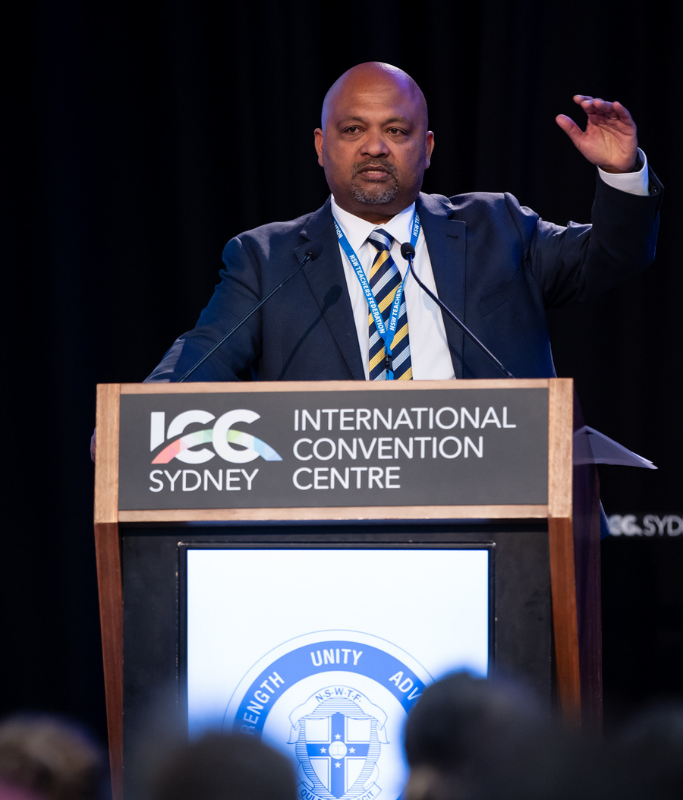
“1150 private schools in Australia (40 per cent) are funded above and beyond their level of need, and a clear majority now receive greater funding from the Commonwealth and state government combined than public schools of similar size and similar location and with comparable student populations,” the decision states. “On current trajectories, this overfunding will continue until 2029 based on the SRS alone.”
Mr Rajendra told Conference the Albanese Government’s commitment in March to fund public schools to 100 per cent of the SRS was testament to the effectiveness of Federation members’ campaigning during the federal election campaign.
“We can’t say this enough: our members delivered,” Mr Rajendra said. “Our members shared a really good message in our communities, often at the gates of schools where they taught, and parents connected immediately with it. We did it with optimism and in kindness. We were disciplined and effective. We were up against it, but we never gave up.”
Federation Senior Vice President Natasha Watt told Conference of Federation’s ambition to pursue world-class learning, sporting and cultural facilities for public schools — not just for wealthy private schools.
“Why don’t we have swimming pools in some of our remote and rural schools where students have to travel two hours to the nearest pool? Why isn’t this needs-based?” Watt asked.
“Why can’t kids in our public system get orchestra spaces? Why don’t we have amazing purpose-built sporting facilities instead of painting white lines on concrete? We should have all these things so we can have the democracy Australia should have.”
The decision also committed Federation to keep up the pressure on state and federal governments to close the funding gap between public and private schools, which has ballooned in recent years, and singled out the soaring number of demountable classrooms in NSW.
“At the time of the release of the AEU’s Ending the capital divide in Australia’s schools report [2024] there were more than 5000 temporary demountable buildings being used as classrooms in NSW public schools, a 30 per cent increase from 2011 to 2021,” the decision states.
“The report identified more than 2000 of the state’s demountable buildings as aged 20 years or older, discrediting the NSW Government’s claim that demountables are merely short-term necessities used to address enrolment growth.”
“13 per cent of classroom spaces in NSW public schools are demountables. It’s gotten to the point where many teachers would prefer the demountable because it’s got the air-conditioning unit attached to it!” Mr Rajendra said.
“It baffles us how private schools can get away with being continually favoured by governments. If this isn’t arrested in some way, it will only continue to feed the unfairness and disparity between the education systems in NSW.”
Flagship campaign needed to pursue staffing and resourcing improvements
Pursuit of the staffing and resourcing enhancements necessary for rebuilding the NSW public school system needs to be a “significant, flagship campaign”, President Henry Rajendra told Annual Conference delegates on Monday.
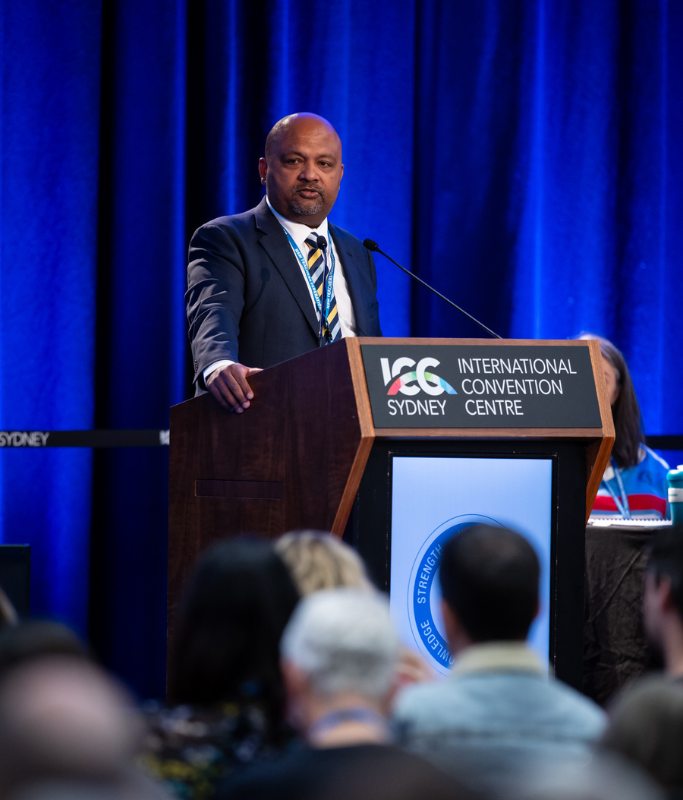
Federation is calling for:
- two additional hours of release time each week for all teachers and release time parity for primary executives with their secondary colleagues. “This is the time. We have additional funding coming in, a la the new funding agreement, and we’ve got the Gonski funding,” Mr Rajendra said.
- reduced class sizes to accommodate the growing complexities within the classroom
- a sliding-scale staffing differential that looks at the complexities of our schools, such as those in rural and remote locations, those with a high proportion of Aboriginal students and Torres Strait Islander students, or those with a high proportion of students English language proficiency.
“We’ve got to seek a breakthrough on this and will continue to build the campaign,” Mr Rajendra said.
“If you want to get rid of Local Schools, Local Decisions, there’s only one way through this and that’s to pull the money back from school bank accounts, allocate it out in terms of an expanded staffing entitlement to deliver you your release time, a reduction in class sizes and the staffing differential to acknowledge the complexities in our communities.”
In May 2024, the NSW Department of Education announced it would “undertake a review of the School Staffing Entitlement allocations to ascertain if they remain fit for purpose as we continue to wind back elements of the Local Schools, Local Decisions policy”. This has not yet happened.
“Until the NSW Government commits Gonski funding to expanding school staffing entitlements, the Local Schools, Local Decisions policy will continue to exist as a worrying feature of the NSW public school system,” the Annual Conference decision Rebuilding the NSW public education system — the reform necessary reads.
“Such improvements must be regulated from the centre and provided as a system guarantee. The stability afforded by the entitlement to more permanent teachers will also provide schools with staffing differentials to meet the needs of Aboriginal students and Torres Strait Islander students, students with disability, those from low socio-economic families, students attaining English language proficiency and schools in remote and regional settings.”
Teachers speak out about occupational violence
NSW public school teachers have hit out at the NSW Government’s plans to make it harder for essential workers to access mental health support, citing the rising threat of violence on the job as evidence that a safety net for psychological injuries is needed more than ever.
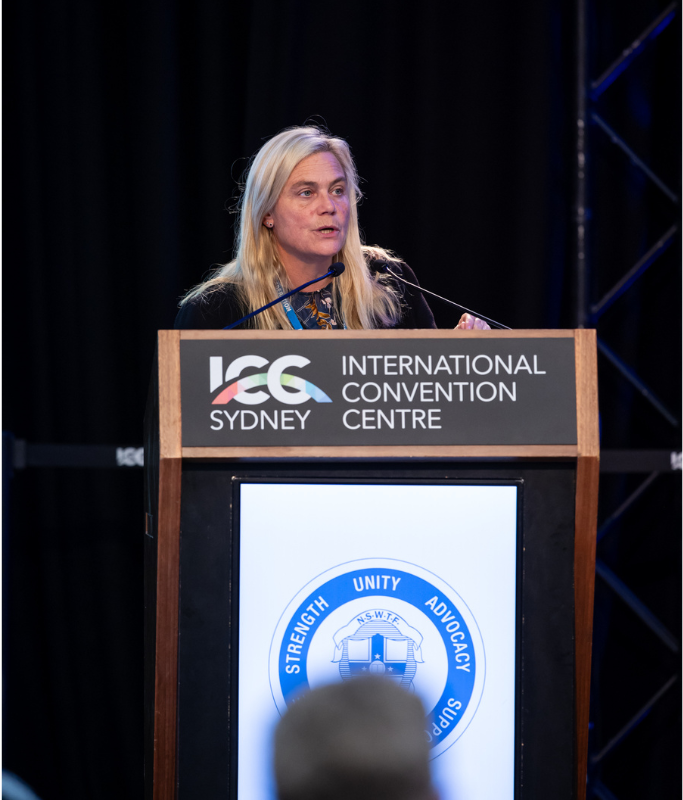
Speaking at Federation’s Annual Conference, Federation Deputy President Amber Flohm said the Government’s proposed changes to workers compensation meant “teachers with work-related mental health conditions will be cut off from ongoing treatment, income support and rehabilitation services”.
“When a teacher suffers a broken limb on a school camp or PE lesson, workers compensation is straightforward. But under new changes being pushed by the State Government, if that same teacher develops anxiety, depression or PTSD from sustained workplace harassment or violence, the system fails them. This double standard is unconscionable,” Ms Flohm said.
Under the proposed changes, people who experience bullying or harassment at work would have to navigate lengthy and expensive legal loopholes to access treatment and support, making it almost impossible for workers to access support for psychological injury.
Federation’s campaigning alongside other NSW unions has to date derailed the Government’s efforts to rush the changes through parliament
“The reality confronting our profession is stark. We are on the frontline of social inequality, fractured social cohesion and rising incidence of challenging behaviour all of which has been aggravated first by COVID and now by the cost-of-living crisis,” she said.
“Teachers and principals also deal with vicarious trauma from supporting students and families through crisis. They burn out from relentless workloads and impossible demands. They suffer psychological injury from bullying. The complex nature of their daily work — supporting vulnerable students, managing challenging behaviours, navigating family crises and supporting their local communities, particularly through recent extreme weather events — takes a profound psychological toll.”
Flohm called on the NSW Government to abandon the proposed changes to the Whole of Person Impairment (WPI) thresholds from 15–31 per cent, arguing that the health and safety of teaching staff was at stake.
“When teachers know they have no safety net for psychological injuries, they’re more likely to suffer in silence, take leave without proper support or simply leave the profession altogether. Entire school communities suffer the consequences,” Ms Flohm said.
“NSW teachers deserve safety at work and a safety net when they’re harmed. The question is whether the NSW Government will listen and act. Our teachers — and our students — deserve better.”
Local ideas considered by peak decision-making body
Ideas for shaping the future of the teaching profession begin with members from across the state.
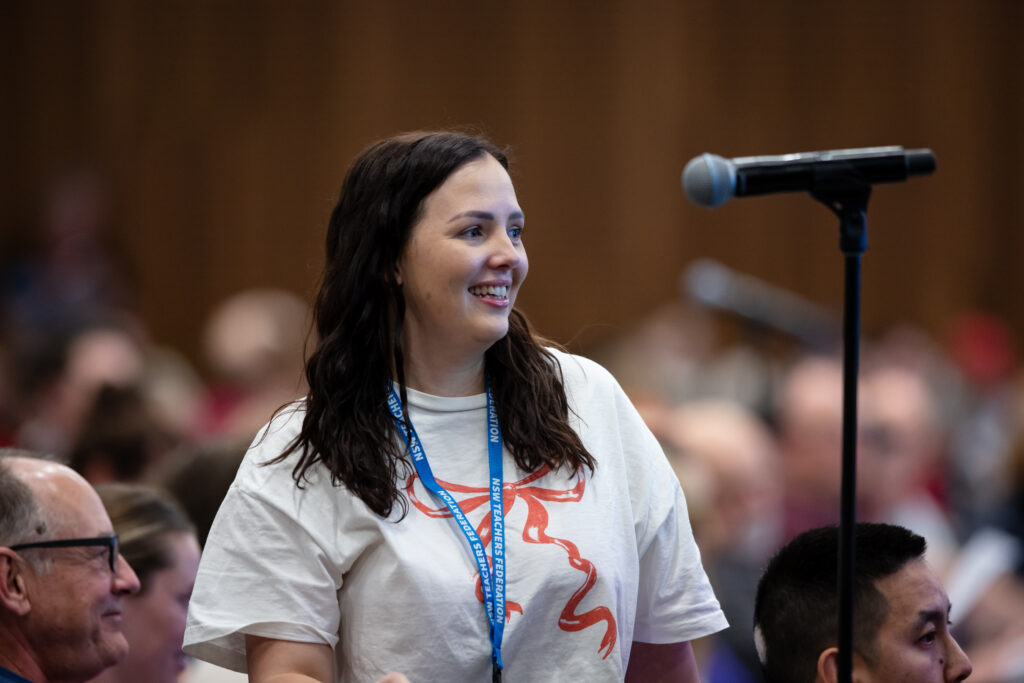
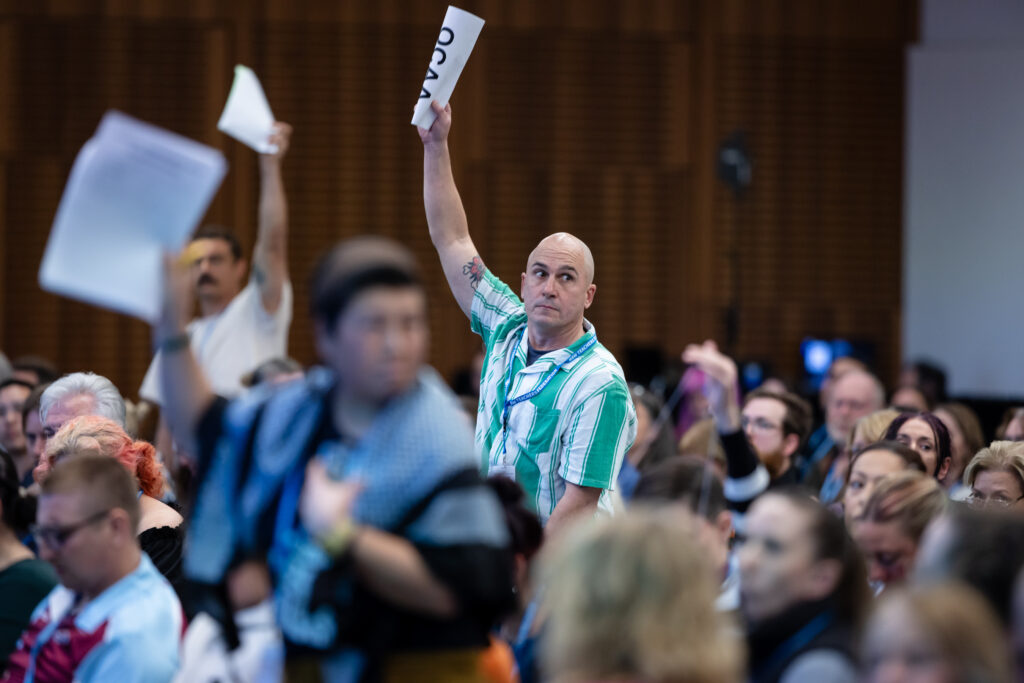
At each annual conference — Federation’s peak decision-making body — time is allocated for delegates to considering motions previously debated by local Teachers Associations, the beating heart of our representative democracy.
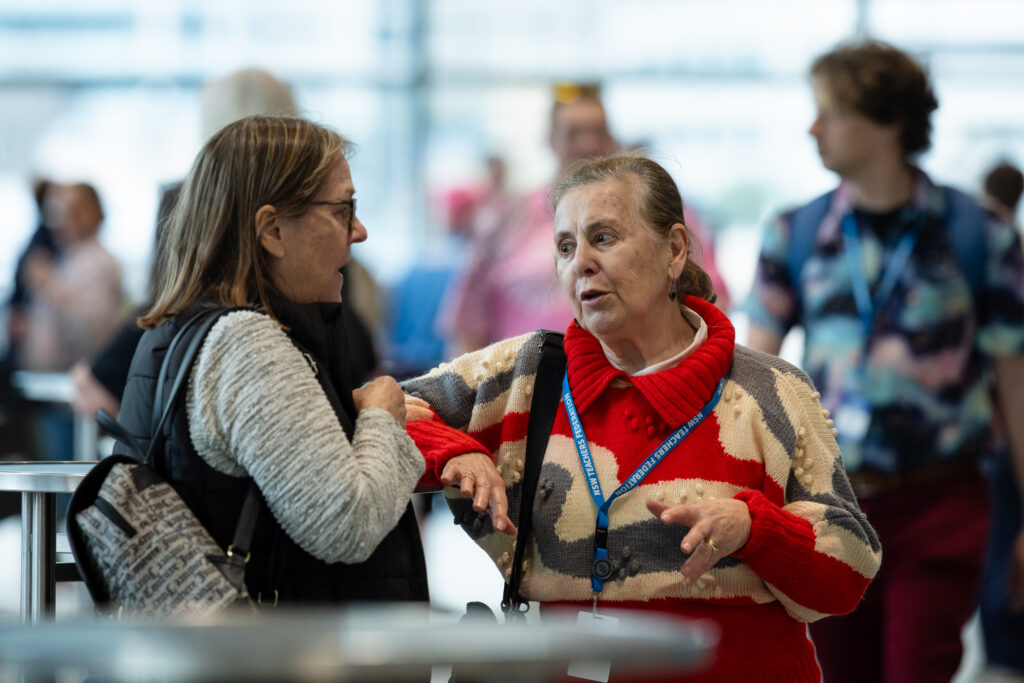
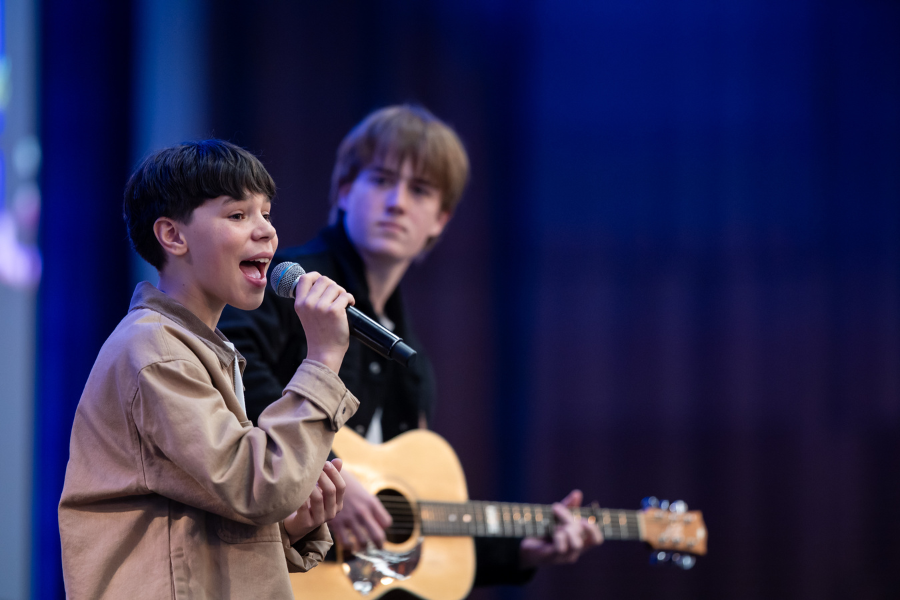
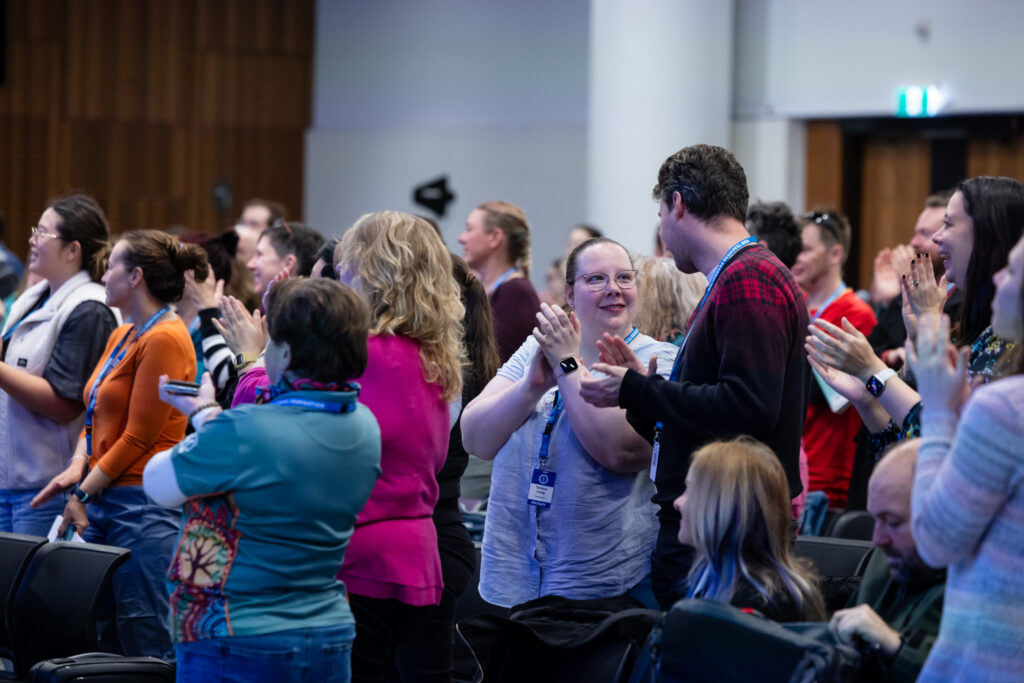
Photos by Narelle Spangher
Annual Conference 2025, Day One
Annual Conference 2025, Day Three