

Originally published in Education Quarterly, Issue 18 2026
It may support some 8000 students, but NSW’s distance education program is a remarkable part of our public education system that’s often overlooked.
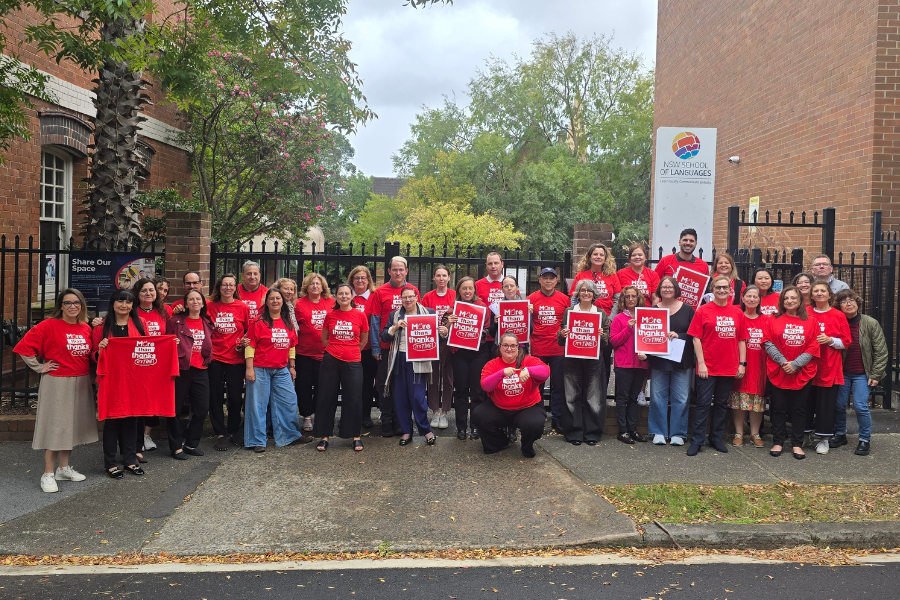
Located in both metropolitan and regional centres, distance education schools provide education to students who face obstacles in accessing school in person. These students can be living around the corner, interstate or in a far-reaching pocket of the globe.
Teachers in these school settings face the particular challenge of keeping a student engaged against all the distractions that come with not being within the confines of a classroom.
Christianna Billows teaches English and Society and Culture at Finigan School of Distance Education. Having taught distance education for most of her career, she’s learned there are no shortcuts to keeping students engaged.
“It’s about relationships — it’s not like a mainstream school where you’ve seen a student come and go for years. We take our students as we find them,” she said. “I would say it takes about double the time to engage them, but when they realise we’re not their worst enemy, they’re really eager to engage.
“It’s important to give them autonomy and flexibility to access the lessons at whatever stage they’re at.”
Diverse student cohort
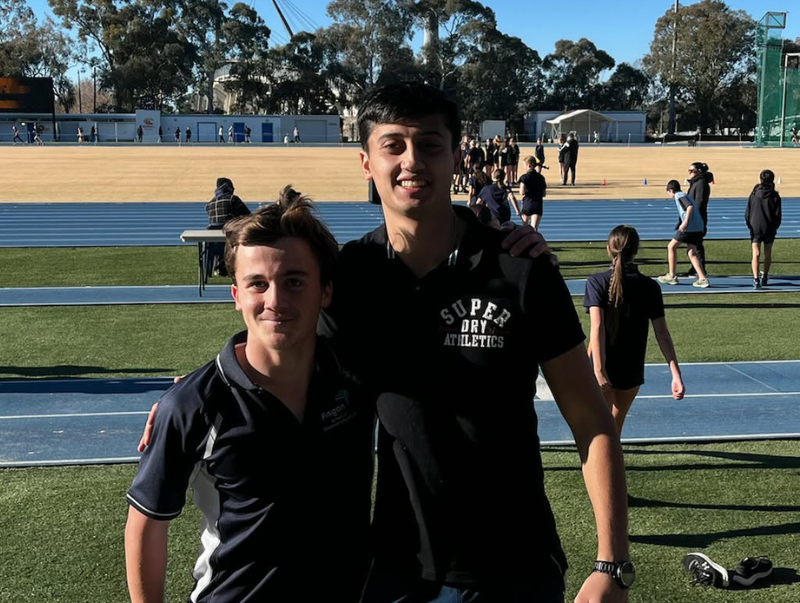
Contrary to popular assumption, it’s not just students in isolated and remote areas who need to access distance education. Students’ parents may be itinerant workers, serve in the military or an overseas consulate, or be travelling long-term. Many students access distance education while they travel to meet elite sport or music commitments.
Others need distance education for reasons that have nothing to do with distance. Distance education can be a vital source of support for students with acute medical conditions, who are pregnant or caring for a child, who are experiencing homelessness or who are in and out of care.
Fiona is the mother of four children, all of whom had periods of distance education.“We were a military family, so we moved all over the place,” she said. “Obviously, having to move all the time is not conducive to traditional education, so distance ed worked really well for us. You’ve got the freedom to do the home education part but you’ve also got access to all the NSW public school resources — athletics carnivals, the Schools Spectacular, that kind of thing.”
Her sons were often part of an extremely diverse student cohort, from students with serious medical conditions to ballerinas, actors and racing-car drivers. Such diversity gave her an appreciation of the unique skillset distance ed teachers use every day. “The flexibility and the personality of the distance ed teachers is so important; they can be a very important person in their kids’ lives,” she said. “It’s often a cohort of kids who are not your standard bell curve — kids who are really excelling, and kids who are really struggling, and teachers have to come up with lessons for both. They know what success looks like for each student and their circumstances. They have a very difficult job and they do it very well.”
Rewarding experiences
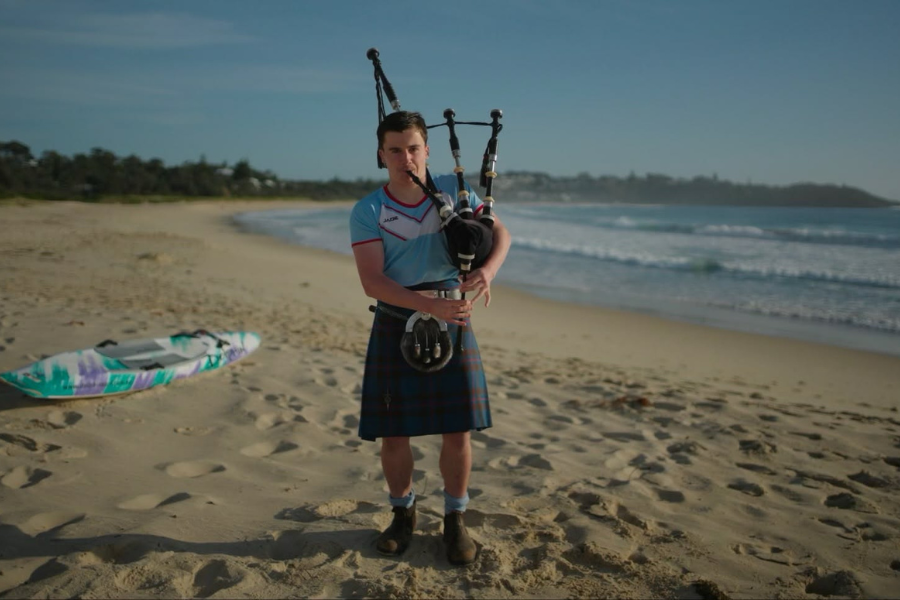
Camden Haven High School teacher Darren Mearrick teaches both distance education and face-to-face teaching — a mix he finds brings unexpected insights.
“It’s a great balance; you become a strong teacher in both modes,” he said. “Distance education can be very rewarding…we teach some of the most vulnerable kids and when you get a connection with them and their families it’s very special.”
With distance education involving logistical challenges not present in face-to-face learning, it’s vital for students to receive support that’s catered to their circumstances.
“Our elite athletes often need support with time management or scheduling around training,” Christianna said. “For students with mental health concerns, it’s about building trust and rapport, so they feel confident enough to engage with the coursework. That can take time — especially with students who haven’t been to school in a long time — and involve teachers and schools adjusting their expectations
about what to expect.”
It may seem counterintuitive, but distance education often lets teachers develop a deeper rapport with their students than in mainstream schools.
“I love that it’s different from a mainstream school,” North East Public School of Distance Education teacher Tracey Stone said. “I speak to the families multiple times a week, which is much more personalised.” She creates an individualised program for each of her students, catering for their needs, location and context.
‘Distance ed is a wonderful thing’
From performing at the annual Schools Spectacular and competing at zone athletics to travelling to Japan on the Premier’s Anzac Memorial Scholarship, Fiona’s sons came out of distance ed with rich and varied school experiences.
“Distance ed fills a space for people who don’t quite fit the mould,” she said. “So many kids these days have labels attached to them, and it’s really difficult for a lot of kids to navigate the school system. But with the right teacher, a lot of those kids can find a way through. From a parent’s point of view, distance ed is a wonderful thing. It can be a lifeline.”